
How Many Litter Boxes Do You Really Need? The n+1 Rule Explained
Quick answer: Keep one litter box per cat, plus one spare: one cat needs two boxes, two cats need three, and three cats need four, each in a different spot. The spare only counts in a separate spot, because two boxes side by side are one facility to a cat. Work out your own count and monthly litter use in our Cat Litter Calculator.
One litter box for every cat, plus one extra. A one-cat home needs two boxes; two cats need three; three cats need four. It is called the n+1 rule, and it is the rule used in standard feline guidelines (the same rule built into our Cat Litter Calculator). If the count sounds generous, this guide explains what the spare box is actually for, why where you put the boxes matters as much as the number, and what the extra box does to your monthly litter bill.
What is the n+1 rule?
The "n" is simply your number of cats. Add one, and that is your box count. The rule comes from standard feline guidelines, and it is why our calculator suggests cats + 1 when you enter your household. One box per cat covers the cats, and the +1 is a spare that belongs to nobody in particular.
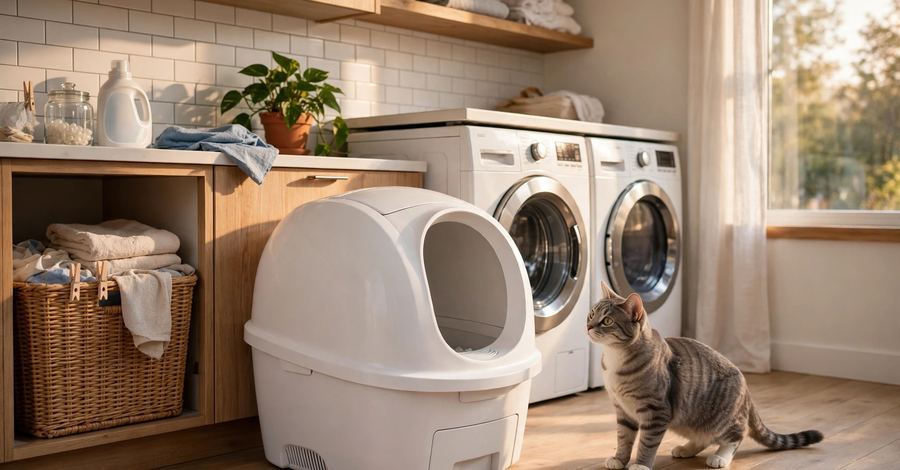
Why does your cat need a spare box?
The spare means there is always another acceptable place to go, whatever state the main box is in. A single box is a single point of failure. The moment it is soiled, mid-clean, or in a part of the home your cat would rather not visit, there is no alternative, and cats are particular about their facilities. The spare removes that problem: whatever state the main box is in, there is always another acceptable place to go.
The second reason is how cats themselves count. Boxes in different spots are, to a cat, separate facilities. Two boxes side by side in one corner function as one. That is why the rule is about boxes in different places, not just boxes. In a multi-cat home it matters even more: each cat can find a free box in a spot of its own, instead of every cat depending on the household's one tray.
Where should the boxes go?
Spread them out. Put the boxes in genuinely different spots (different rooms where you can) rather than lined up along one wall. Two side by side count as one facility to your cat, so a pair in the laundry room is, for the purposes of this rule, one box.
Keep every box reachable around the clock, too. A box behind a door that is shut at night quietly drops out of your count for half the day. And if your home has more than one floor, different floors are about as different as spots get. A box upstairs and a box downstairs are two facilities in a way two trays in one corner never will be.
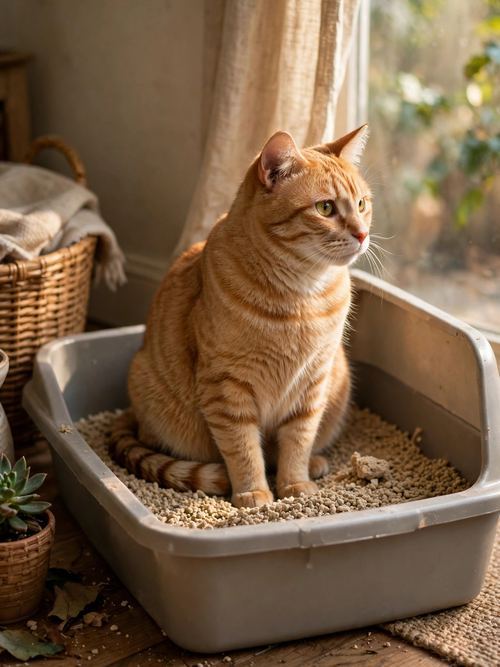
What counts as a litter box?
A box, for this rule, is an ordinary litter tray in its own spot. The standard size our calculator works with is about 18 × 14 inches, measured inside, filled 2–3 inches deep, deep enough to dig and bury in, shallow enough that you are not discarding unused litter at every full change. One extra-large tray, however roomy, is still one facility in one place: the extra size can help a big cat fit comfortably, but it does not replace the spare.
What does the extra box cost?
For one cat with two standard boxes, the total comes to about 61 lb of litter a month, roughly $53. The trade-off is real: the spare is not free. A second box roughly doubles the litter you use on fills and full changes compared with running one box. Fill depth is the other big lever, since filling 4 inches deep instead of 3 throws away about a third more litter at every full change.
For scale: one cat with two standard 18 × 14 inch boxes filled 3 inches deep with clumping clay uses about 61 lb of litter a month — roughly $53 at $24 for a 28 lb bag. Your own figure depends on your box size, depth and litter type, which is exactly what the calculator below works out from your real numbers.
Use the Cat Litter Calculator
Enter your cats, boxes and litter type to see your monthly usage in pounds, bags and cost, plus what the spare box adds to the bill.
Use the calculatorMistakes to avoid
Most of these come down to counting: two boxes side by side count as one facility, and one large tray is still just one box.
- Counting two side-by-side boxes as two. To your cat they are one facility. The spare only counts in a different spot.
- One box for the whole household, however many cats. Two cats need three boxes. The rule scales with the cats, not with the home.
- Buying one huge tray instead of a spare. Floor area is not the point; separate facilities are.
- Forgetting to recount when a cat arrives. A new kitten moves the target too: cats + 1, every time the cat count changes.
- Putting every box in one room. If that room is busy or shut away at night, your whole count can vanish at once.
Litter box questions
How many litter boxes do two cats need?
Three: one per cat, plus one spare — the n+1 rule used in standard feline guidelines. Put them in different spots. Two side by side count as one facility to a cat, so a pair in one corner plus one elsewhere makes a better three than a row of three in the same room.
Can two cats share one litter box?
They may both use it, but one shared box is below the guideline count for two cats, and it leaves no spare: when the box is soiled or being cleaned, there is no alternative facility. Three boxes in separate spots is the setup the n+1 rule points to.
Where should I put the extra litter box?
Somewhere genuinely different from the first — another room if you can. Boxes in different spots count for more than two side by side, because cats treat them as separate facilities. Just make sure the spot stays reachable at all hours; a box behind a door that closes at night is only a part-time box.
Does one extra-large box count as two?
No. The rule counts facilities, not floor area. A standard box is about 18 × 14 inches; a bigger tray can be a good idea for a big cat, but it sits in one place, and one place is one facility. The spare has to be a separate box in a separate spot.
This guide supports the Cat Litter Calculator. More guides — on measuring for a crate, water needs, pet years and senior care — are listed on the blog index.