
Can Cats Eat Dog Food?
Quick answer: Not as a meal, no. A bite or two of dog food now and then is not a problem for most healthy cats, but dog food cannot feed a cat: it is made to a different species’ requirements and comes up short on taurine, preformed vitamin A, arachidonic acid and protein. A cat fed on dog food will run into deficiencies over time. Her own numbers are in our Cat Food Calculator.
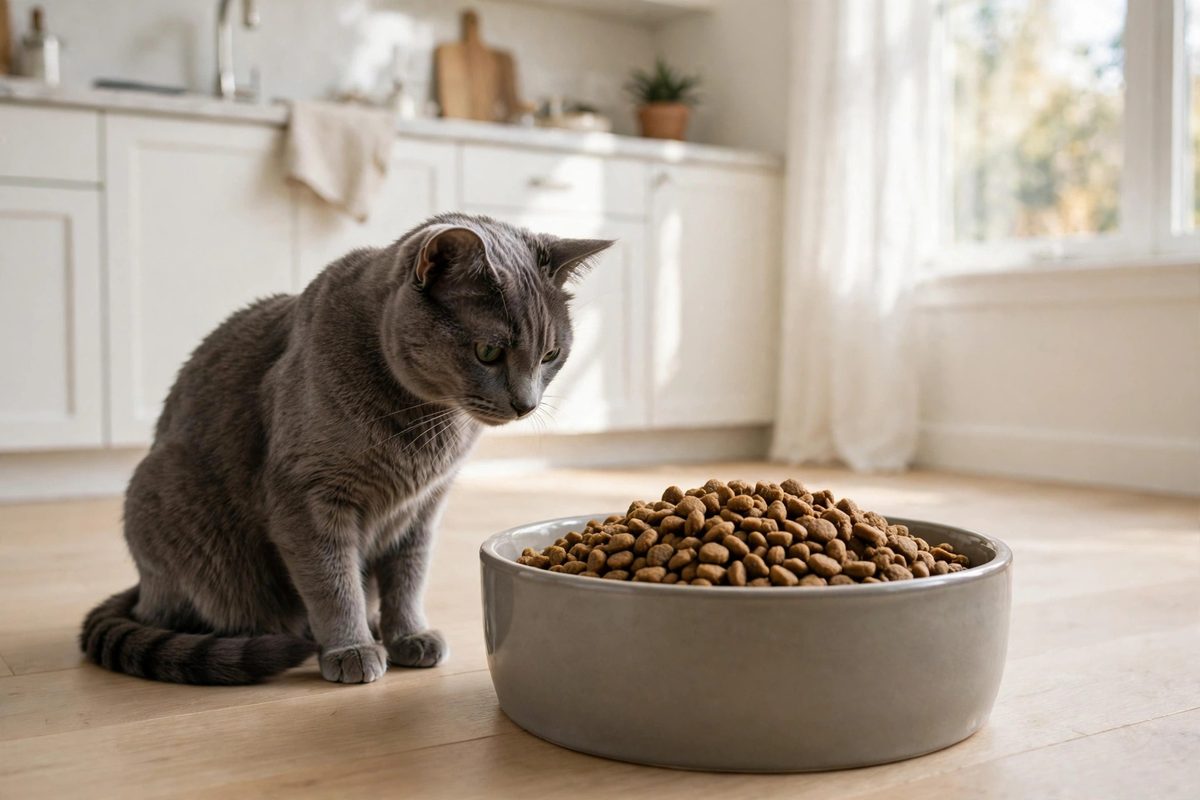
The bowls sit side by side, the foods look almost identical, and the cat, given the choice, often heads for the dog’s. It raises a fair question: if it looks the same and she likes it, can a cat just eat dog food? The answer matters more than most feeding questions, because this one is not about an upset stomach. Dog food is not poisonous to cats, but it is incomplete for them in ways that build up quietly. This guide covers what is missing, how much it matters, and what to do if your cat keeps raiding the wrong bowl.
Is dog food dangerous for a cat?
Not in the way a poison is dangerous. Veterinary feeding guidance is clear that a bite or two of dog food now and then is not a problem for most healthy cats, and a cat who steals a mouthful from the dog’s bowl has not done herself an injury. There is no emergency here and nothing to rush for.
The problem starts when dog food stops being a stolen bite and becomes the diet. Commercial dog diets are not intended to be the sole source of nutrition for cats, and cats fed diets formulated for dogs can develop nutritional deficiencies. The harm is slow and cumulative rather than sudden, which is exactly why it is easy to miss until it has been going on a while.
Why can’t a cat just eat dog food?
Because a cat is not a small dog. Cats are obligate carnivores: they rely on nutrients found only in animal products, and their bodies run several processes differently from a dog’s. Dogs can adapt to a fairly wide range of diets, including fairly low-protein ones; cats use protein as an energy source and need much more of it.
The differences are specific. Unlike dogs, cats require dietary sources of vitamin A, arachidonic acid and taurine, and they have higher requirement levels for some amino acids, such as arginine, and for niacin and vitamin B6. A food formulated to a dog’s requirements is not failing at its job. It is doing a different job, for a different animal.
What exactly is missing from dog food?
Taurine is the sharpest example. It is an essential amino acid for cats, and dog food does not contain enough taurine to meet a cat’s normal requirements. Deficiency is slow: it can take several months before symptoms become apparent. Left untreated, the retinal degeneration it causes leads to irreversible blindness, and the heart muscle disease it causes progresses to heart failure. This is the nutrient that turns “she seems fine on it” into a risky sentence.
Vitamin A is a quieter gap. Dogs can make their own vitamin A from the beta-carotene in plant ingredients; cats lack the enzyme for that conversion and need preformed vitamin A directly in their diet, the kind supplied by animal ingredients such as liver and fish oil. A dog food that leans on beta-carotene is feeding a pathway cats do not have.
Protein is the everyday gap. The minimum for an adult cat’s diet is 26% protein on a dry-matter basis, against 18% for an adult dog, and cats need that protein because they burn it as fuel. Arachidonic acid, a fatty acid found in animal fat, is another cat-only requirement: dogs can make it from other fats, while cats cannot readily do so. Add the gaps together and a bowl of dog food is short on almost every line that defines a cat’s diet.
What happens if a cat eats dog food every day?
A cat that eats only dog food can develop signs of illness, sometimes within hours, or over several days or weeks. The signs named in veterinary guidance include nausea, vomiting, weight loss and even seizures. Those are the early, visible end of the problem.
The slower end is the deficiency list from the section above working itself out: taurine shortage damaging eyes and heart over months, on top of a diet that never quite covers protein, vitamin A and the rest. A cat can look perfectly well while this is building, which is why “she has been on it for weeks and seems fine” is not the reassurance it feels like. If your cat has been eating dog food as her main diet for any length of time, that is worth a conversation with your vet, not just a change of bag.
My cat keeps stealing the dog’s food. What should I do?
Treat it as a management problem, not a behaviour problem. Feed the two animals apart, different rooms, or the cat up on a surface the dog cannot reach, and pick the dog’s bowl up when the dog has finished rather than leaving it down for grazing. A stolen morsel is harmless; a bowl left down all day is a second, wrong diet on offer.
Then check the other direction: a cat who raids the dog’s bowl at every opportunity may simply prefer it, or her own meals may not quite be meeting the day. The Cat Food Calculator works out how much of a real cat food she should be getting, and the Pet Calorie Calculator gives the daily figure behind it. If she is losing weight or going off her own food altogether, that is a vet conversation rather than a feeding one.
Use the Cat Food Calculator
Turn your cat’s daily calories into cups, cans or grams of a food that is actually made for cats, with taurine, vitamin A and protein included.
Use the calculatorThe short version
Dog food: a stolen bite is fine, a diet is not. It will not poison your cat, but it is short on taurine, preformed vitamin A, arachidonic acid and protein, and those shortages add up. Eyes, heart and general condition are what pay for them. Feed her a complete cat food, in the amounts the Cat Food Calculator gives, and let the dog keep his.
Dog food questions
Will a little dog food hurt my cat?
No, not in most cases. A bite or two of dog food now and then is not a problem for most healthy cats. The problem is not the occasional stolen bite; it is dog food fed as the diet, because commercial dog diets are not intended to be the sole source of nutrition for cats.
Why is dog food bad for cats if it looks the same?
Because the two species need different things. Cats are obligate carnivores who require dietary taurine, preformed vitamin A and arachidonic acid, and a minimum of 26% protein on a dry-matter basis, against 18% for dogs. Dog food is formulated to the dog’s list, so it comes up short on the cat’s.
How long can a cat eat dog food before it does harm?
There is no safe stretch of time to plan around. A cat eating only dog food can show signs of illness within hours, or over several days or weeks, while the deepest shortage, taurine, can take several months to become apparent. Occasional bites are fine; dog food as the regular diet is not.
Can I mix dog food into my cat’s food to use up a bag?
It is not a good use of the bag. Every portion of dog food in the bowl is a portion of the day that does not meet her requirements, and the bigger the share, the bigger the gap. If the bag cannot go back, it is better given to a dog-owning friend or a shelter than worked through your cat.
This guide supports the Cat Food Calculator and the Pet Calorie Calculator. Sister guides in the same series: Can Cats Eat Bananas?, Can Cats Eat Cheese?, Can Cats Eat Eggs?, Can Cats Eat Peanut Butter? and Can Cats Eat Strawberries?. More guides are listed on the blog index.