
Cat Heat Cycle Calculator
Enter the first day of her last heat to estimate when the next one is due and how long it should run.
For dogs, see our Dog Heat Cycle Calculator.
Quick answer: Each heat lasts about 6–7 days, and in season — spring through early autumn — heats repeat every 14–21 days. Indoor cats kept under artificial light may cycle outside the usual season.
How often do cats go into heat?
In season, an unspayed cat comes into heat every 2–3 weeks, and each heat lasts about 6–7 days. The break in between can be just days to a couple of weeks, which surprises most owners: the calling ends, a short quiet gap follows, and then the rolling and restlessness start all over again. Spring can feel like one endless heat, and biologically it nearly is.
Daylight drives the season itself. Outdoors, most cats cycle from spring through early autumn in the Northern Hemisphere, then rest over winter. Indoor cats living under artificial light miss that "winter is coming" signal, so many of them keep cycling all year round.
One more thing worth knowing: cats are induced ovulators, which means ovulation is normally triggered by mating itself, not by the calendar. So an unmated heat simply ends with no pregnancy, but if she does meet a male, mating can trigger ovulation that same day. Treat the dates from this calculator as a planning aid for her care, never as a safe window. The only reliable ways to prevent kittens are keeping her in and away from males, or spaying, which also ends the heats for good. Your vet can talk through the timing.
How long does a cat stay in heat?
A cat stays in heat for about 6–7 days.
If she isn't mated, the heat simply runs its course and ends, and while she is still in season the next one usually follows within 2–3 weeks. If she does mate, mating can trigger ovulation that same day, and if she conceives, the heats stop, with kittens arriving about 65 days after the mating.
When does a cat go into heat?
A cat goes into heat during the breeding season, which runs from spring through early autumn, and indoor cats may cycle all year round. Most cats can first come into heat between 4 and 12 months of age, often around 6 months.
Daylight drives the season: outdoors, most cats cycle from spring through early autumn in the Northern Hemisphere, then rest over winter. Indoor cats living under artificial light miss that "winter is coming" signal, so many of them keep cycling through winter too, and while a cat is in season her heats repeat every 2–3 weeks.
What are the key timings in a cat's heat cycle?
A heat lasts about 6–7 days, and in season the next one follows 2–3 weeks later. The table below gathers every figure this calculator uses in one place; individual cats vary, but this is the pattern vets describe for a typical unspayed cat.
| Part of the cycle | Typical timing |
|---|---|
| Heat (estrus) itself | About 6–7 days |
| Time between heats, in season | Heats repeat every 2–3 weeks |
| Breeding season (Northern Hemisphere) | Spring through early autumn |
| Indoor cats under artificial light | May cycle all year round |
| Ovulation | Usually only happens after mating |
| If she mated and conceived | Kittens arrive about 65 days after the mating (most between days 61 and 70) |
How can you tell if a cat is in heat?
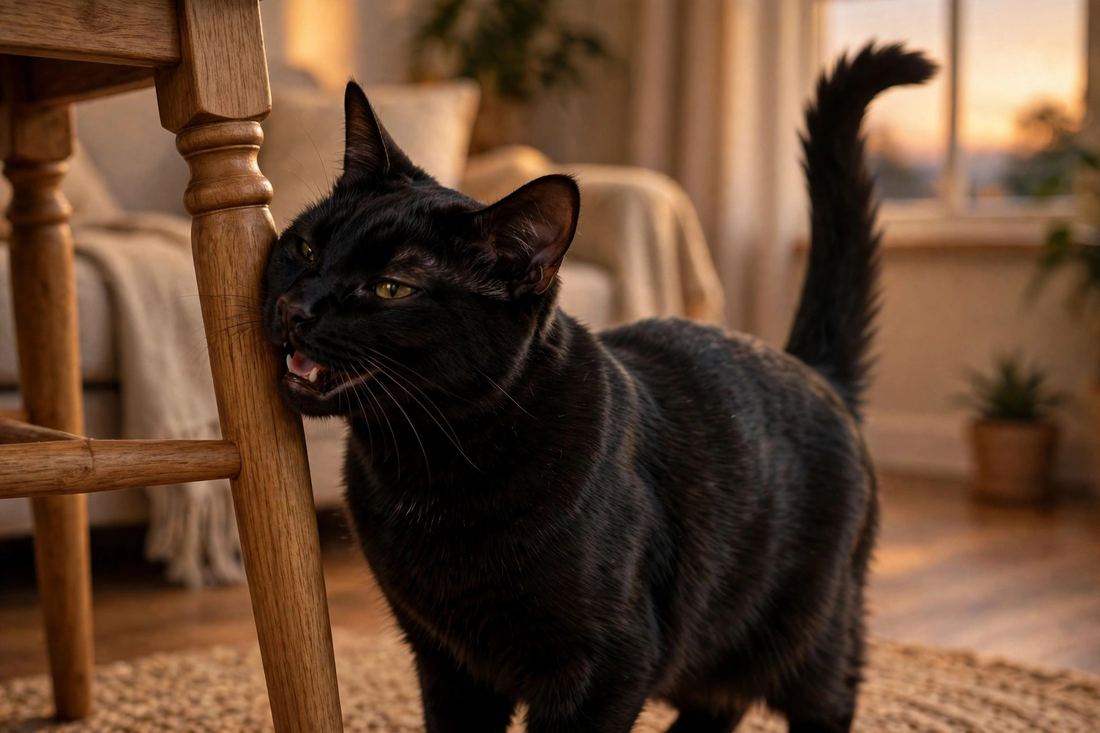
The clearest signs are loud calling or yowling (often at night), restlessness, and a cat who turns unusually affectionate, rubbing against people, furniture and the floor. She may also roll around, crouch low with her hind legs treading, hold her tail to one side, and eat less than usual. She isn't in pain; it's hormone-driven behavior. The practical risk is escape: a cat in heat will work hard to get outside to find a mate, so be extra careful with doors, windows and screens until it passes.
How does the calculator work out her next heat?
It adds the cycle length you pick (14, 18 or 21 days) to the first day of her last heat to estimate the next one, then counts forward for the heats after that. The pattern behind those dates is the standard veterinary description of the feline estrous cycle, in standard veterinary references: the cat is seasonally polyestrous, meaning heats repeat every 14–21 days (2–3 weeks) through a breeding season that runs from spring through early autumn in the Northern Hemisphere (indoor cats under artificial light may cycle year-round). Each estrus lasts about 6–7 days, and ovulation usually happens only after mating. Sources checked in November 2026.
Because the natural cycle is a range (2–3 weeks) rather than a fixed number, this calculator lets you pick the rhythm that matches your own cat (14, 18 or 21 days) and treats the result as the middle of a window a few days either side, not a promise. If her heats suddenly change pattern, stop for a long stretch after she has been near a male, or she seems unwell, that's a conversation for your vet, not a calculator.
Worked example
Bella's last heat began on November 2, 2026. Her heats come about every 18 days and usually last 6 days. Adding 18 days puts her next heat at November 20, 2026, running about 6 days to November 25, and if the rhythm holds, the two after that fall around December 8 and December 26, 2026. That's the calculator's pre-filled example above.
Where these numbers come from: see our Sources page.
Cat heat cycle questions
How often do cats go into heat?
During the breeding season, an unspayed cat comes into heat every 2–3 weeks. The season runs from spring through early autumn in the Northern Hemisphere, so spring and summer can feel like one heat after another, with only short quiet gaps between them.
How long does a cat stay in heat?
Each heat (estrus) lasts about 6–7 days. If she isn't mated, the heat ends, and while she is still in season, the next one usually follows within 2–3 weeks.
What are the signs that my cat is in heat?
The classic signs are behavioral: loud calling or yowling (often at night), restlessness, rolling on the floor, rubbing against people and furniture, crouching low with her hind legs treading, and sometimes eating less. She isn't in pain. It's hormone-driven behavior, but she will try hard to get outside to find a mate, so keep doors and windows secure.
At what age can a cat get pregnant?
From her very first heat. A cat can become pregnant on her first estrous cycle, and that first heat can come at any point between 4 and 12 months of age, most often around 6 months. If you are not planning kittens, keep a young unspayed cat away from males from about four months old, and ask your vet about spaying.
Does a cat ovulate even if she doesn't mate?
Usually not. Cats are induced ovulators, which means ovulation is normally triggered by mating itself. An unmated heat simply runs its course and ends, and because no eggs were released, she can't be pregnant from that heat. It also means cycle dates should never be relied on to prevent pregnancy: if she meets a male, mating can trigger ovulation that same day.
My cat's heats have stopped after she was near a male. Could she be pregnant?
She could. If mating triggered ovulation and she conceived, the heats stop, and kittens typically arrive about 65 days after the mating, most of them between days 61 and 70. Only a vet can confirm a pregnancy, so book a check-up rather than waiting and wondering.
Next calculators you might need
Cat Pregnancy Calculator
Due date around day 65, in the normal 61–70 day window.
Live nowKitten Vaccination Schedule
Every vaccine round dated from your kitten's birth date, with a calendar download.
Live nowPet Calorie Calculator
Daily calories (RER × life-stage factor) for dogs and cats.
Live nowIf a heat ended with a mating, the Cat Pregnancy Calculator picks up from there. Once kittens arrive, the Kitten Vaccination Schedule dates every vaccine round; see the Pregnancy hub for the full list.