
Signs Your Pet Is Drinking Too Much Water
Quick answer: A healthy dog or cat normally takes in about 44–66 ml of water per kilogram of body weight per day. For a dog, sustained drinking above about 100 ml per kilogram per day counts as excessive thirst and means a vet visit; for a cat there is no single agreed number, so a lasting rise above her own normal is the warning sign. Put your pet's weight into the Pet Water Intake Calculator to get their exact daily range.
If you're refilling the water bowl more often than you used to, put a number on it before you worry. Vets work with a simple range: a healthy dog or cat takes in about 44–66 ml of water per kilogram of body weight per day, counting the moisture in their food. For a dog, sustained drinking above about 100 ml per kilogram per day is what vets call excessive thirst, and that's the point where a vet visit replaces guesswork. For a cat there is no single agreed number; a lasting rise above her own normal is the warning sign. One thirsty day after a hot walk means little. A lasting change from your pet's normal is the thing that matters.
How much water is normal, anyway?
The normal range is 44–66 ml of water per kilogram of body weight per day, and it is total water: bowl water plus food moisture. A dog on dry kibble (about 10% moisture) drinks nearly all of it at the bowl. A cat on wet food (typically 70–80% water) may barely seem to drink at all and still take in plenty, because most of it arrives in the food. Two cross-checks land in the same range: the "ounce per pound" rule of thumb for dogs, and a common guide for cats of roughly 4 fl oz per 5 lb. Here it is at common weights, the same table our Pet Water Intake Calculator is built on:
| Pet weight | Total water per day | In cups |
|---|---|---|
| 5 lb | 3.4–5.1 fl oz | 0.4–0.6 cups |
| 8 lb (typical cat) | 5.4–8.1 fl oz | 0.7–1.0 cups |
| 10 lb | 6.7–10.1 fl oz | 0.8–1.3 cups |
| 15 lb | 10.1–15.2 fl oz | 1.3–1.9 cups |
| 20 lb | 13.5–20.2 fl oz | 1.7–2.5 cups |
| 30 lb | 20.2–30.4 fl oz | 2.5–3.8 cups |
| 40 lb | 27.0–40.5 fl oz | 3.4–5.1 cups |
| 50 lb | 33.7–50.6 fl oz | 4.2–6.3 cups |
| 60 lb | 40.5–60.7 fl oz | 5.1–7.6 cups |
| 80 lb | 54.0–81.0 fl oz | 6.7–10.1 cups |
| 100 lb | 67.5–101.2 fl oz | 8.4–12.7 cups |
For dogs, the too-much line works the same way at any size: over 100 ml per kilogram per day, day after day. For the 40 lb dog in the table, that's more than about 61 fl oz (well over seven cups) every day, not just on a hot one.
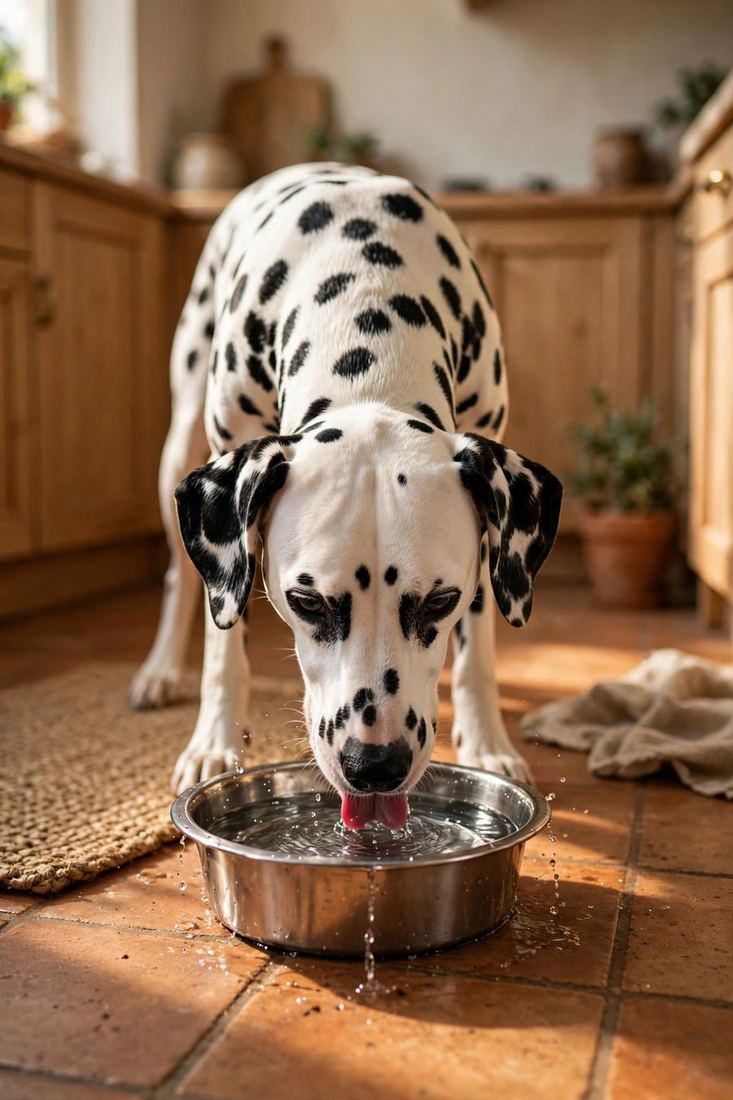
Why is my pet drinking more than usual?
Hot weather, hard exercise, dry food, nursing a litter, and being young, growing or very active can all raise a pet's drinking. A higher reading isn't automatically a problem. Intake legitimately rises when:
- The weather is hot, or your dog has exercised hard — needs push toward, and sometimes past, the top of the range.
- Your pet eats dry food — almost all their water comes from the bowl, so the level falls faster than on a wet diet.
- A mother is nursing a litter — lactation is thirsty work and sits above the standard range.
- Your pet is young, growing or very active — puppies, kittens and sporting dogs drink at the top of the range or beyond it.
What these have in common is a reason you can point to, and a return to normal when the reason passes. Drinking that stays high for no obvious reason is different. That is the pattern to measure and mention to your vet.
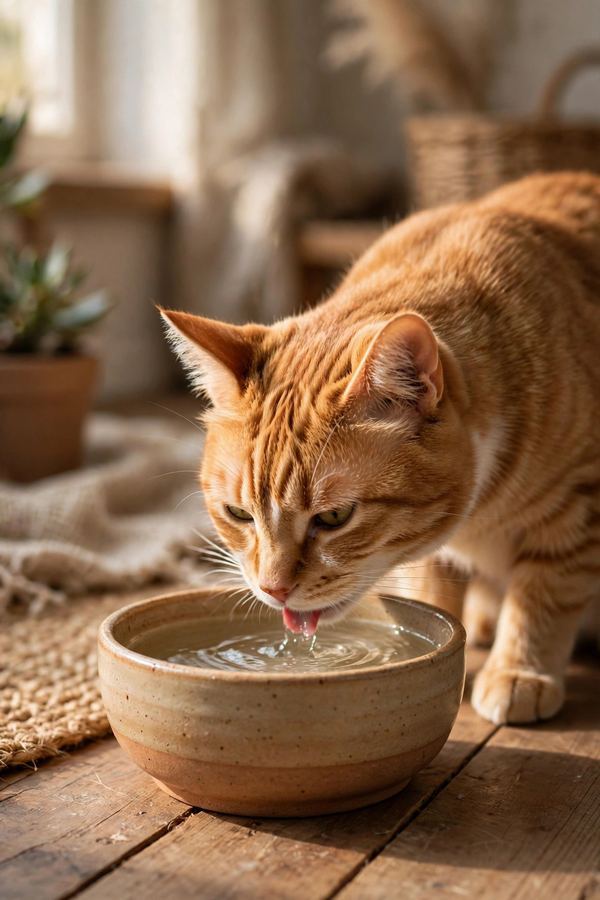
How do I measure how much water my pet drinks?
Fill the bowl from a measuring jug each morning, take every top-up from that jug, and subtract what's left the next morning. You can't judge intake by how the bowl "seems". Measure it over two or three ordinary days:
- In the morning, fill the bowl from a measuring jug and write down how much you poured.
- Every top-up that day comes from the same jug, so note each one.
- The next morning, pour what's left in the bowl back into the jug and subtract it.
- Add up what you poured, take away what was left: that's the day's drinking. Repeat for two or three days and compare the average with the range for your pet's weight.
Two caveats: if two pets share a bowl, you're measuring the household, not the individual, so separate them for the test days if you can. And splashes and spills count as "drunk" in your figures, so treat the result as close, not exact, especially for a wet-food pet, whose bowl figure understates their true total anyway.
Write the numbers down and take them with you if you see the vet. A short record like this is genuinely useful to them, far more than "he seems thirstier lately".
When should I call the vet?
Call the vet if your dog's measured average sits above the 100 ml/kg line day after day, or your cat is drinking clearly more than her own normal, and call straight away if your pet seems unwell in any other way. Book the visit if:
- Your dog's measured average sits above the 100 ml/kg line, or your cat is drinking clearly more than her own normal, day after day.
- Your pet is drinking clearly more than their own normal, and it lasts more than a couple of days.
- Drinking has changed alongside urination. A clear change in either is always worth a visit.
- Your pet seems unwell in any other way — don't finish the measuring days first; call now.
Excessive thirst is a symptom, not a diagnosis. It can have many causes, and no website can tell you which one applies to your pet — only a vet who examines them can do that. What you can usefully do is bring the measurement.
One rule while you wait for the appointment: never restrict your pet's water. Rationing water can be dangerous, and a pet who is drinking more is doing it for a reason. Keep the bowl full, measure, and let the vet do the diagnosing.
The same logic runs in reverse: a pet who suddenly drinks far less than usual, especially one off their food as well, deserves the same phone call.
Get your pet's exact range
Drinking questions
How much water is too much for a dog?
Vets use sustained drinking of more than about 100 ml per kilogram of body weight per day as the working definition of excessive thirst. For a 40 lb dog that's over roughly 61 fl oz a day, day after day, against a normal total range of about 27–40 fl oz. One big-drinking day after heat or exercise isn't the concern; the pattern is.
How do I measure how much water my pet drinks?
Fill the bowl from a measuring jug each morning and note what you pour, top up only from that jug, and the next morning measure what's left and subtract it. Do it for two or three ordinary days and average the results. If pets share a bowl you'll get a household figure rather than an individual one — separate them for the test days if you can.
Why is my pet drinking more than usual?
There are plenty of ordinary reasons: hot weather, hard exercise, a dry-food diet, nursing a litter, or being young and growing. Those have an obvious cause and settle when the cause passes. Drinking that stays high with no clear reason is different — it can have many causes, and only a vet can find out which applies to your pet. Measure it for a couple of days and book the visit.
Should I limit my pet's water if they're drinking a lot?
No. Healthy pets should have free access to clean water at all times, and rationing water can be dangerous: a pet drinking more is doing it for a reason. Keep the bowl full, measure the intake over a couple of days, and take the numbers to your vet instead.