
Can Cats Eat Cheese?
Quick answer: Only sometimes, and only a little. Cheese is not toxic to cats, but it is a dairy food, and many cats cannot digest the lactose in dairy, so the likely result is an upset stomach rather than a treat enjoyed. Even a one-inch cube of cheddar carries about 69 kcal, roughly three days of treats for an average cat, so if cheese happens at all, a pea-sized piece inside the treat budget is the whole serving. Work out your cat’s budget with our Pet Calorie Calculator.
You are grating cheese, a piece drops, and your cat is suddenly very interested. Cheese feels like a harmless people food to share, and in one sense it is: no poison-control reference lists cheese as toxic to cats. But dairy is where cheese runs into trouble, because a great many cats cannot digest it properly. This guide covers why, what a piece of cheese actually costs in treat calories, and what to offer instead. The feeding maths behind the amounts sits in our Cat Food Calculator.
Is cheese toxic to cats?
No. Cheese does not appear on the published lists of people foods pets should never eat, and no veterinary reference classifies it as a poison for cats. A cat who has eaten a piece of cheese has not had a poisoning emergency, and there is no antidote to rush for and no panic to have.
What cheese is, though, is dairy, and dairy is a poor fit for most cats. Standard feline nutrition guidance advises against milk as a treat because many cats are lactose-intolerant and can develop gastrointestinal problems when they are fed dairy products. The reason is an enzyme: cats, like other pets, do not produce significant amounts of lactase, the enzyme that breaks down lactose, the sugar in milk. Cheese is made from milk, so it carries lactose with it, and the cat who eats it is eating a sugar her body is not well equipped to digest.
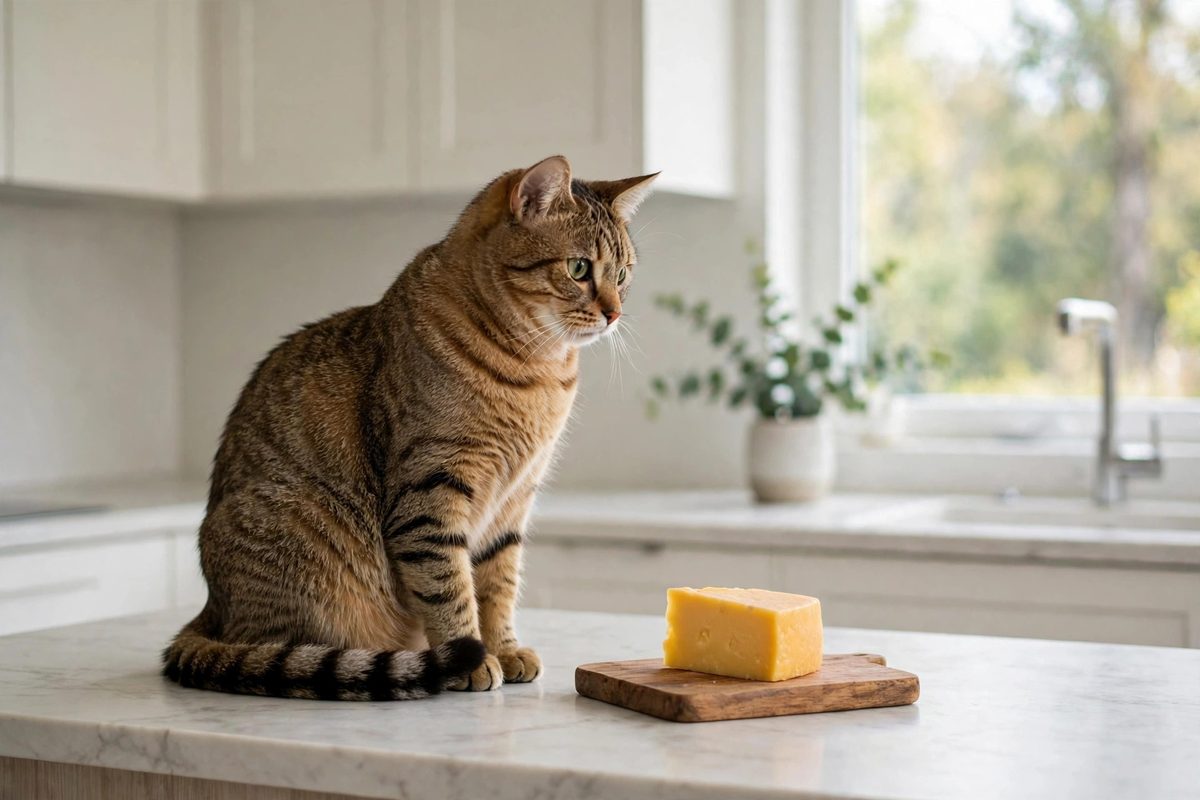
What happens if a cat eats cheese?
For most cats, the outcome is digestive and short-lived: loose stools or diarrhea, and general stomach upset. That is the pattern the references describe for dairy in cats, gastrointestinal problems rather than poisoning, and it is uncomfortable for the cat and messy for you, but it is not in the same category as the genuinely dangerous foods on the never-feed list.
Kittens are the exception people picture, and the picture is out of date. Kittens digest their mother’s milk, but by about 12 weeks of age most have lost the ability to digest lactose. An adult cat has no nutritional need for milk or cheese at all, and “she loved it as a kitten” is not evidence that dairy suits her now.
An upset stomach after a small piece of cheese should settle on its own. Call your vet if the diarrhea keeps going, if she stops eating, or if she seems unwell in any other way. The same advice stands for any food that disagrees with her. If what she ate was not plain cheese but a flavoured cheese made with onion, garlic or chives, that is a different situation: those are on the never-feed list, and a prompt call to the vet is the right move.
How much cheese can a cat have?
The treat rule in standard veterinary nutrition guidance is simple: treats of every kind, added together, should make up less than 10% of a cat’s daily calorie intake. Cheese has no separate allowance of its own; it comes out of the same small budget as everything else that is not her measured meals.
Cheese spends that budget fast. On the standard food-composition figures, cheddar carries 113 kcal in a single ounce (28 g), and about 69 kcal in a cubic inch (17 g), a modest cube. A neutered 4 kg (about 9 lb) cat needs roughly 238 kcal a day on the Pet Calorie Calculator’s figures, so her whole day’s treat allowance is roughly 24 kcal. One one-inch cube of cheddar is about three days of treats in a single piece, and an ounce is nearly five days’ worth.
So the practical serving size is a crumb, not a cube: a pea-sized piece, offered occasionally, and counted. If you want your own cat’s numbers rather than an average, the Pet Calorie Calculator gives her daily calorie figure from her weight and life stage, and the Cat Food Calculator turns the rest of the day into her actual meals. If your cat is carrying extra weight, cheese is one of the first extras to drop. The Cat Weight Calculator will show you where she stands.
Does cheese do a cat any good?
Cheese has protein and calcium, and for people it is a useful food. For a cat already eating a complete cat food, it adds nothing she is short of: her meals were formulated to cover her needs in full, which is exactly why treats are capped at a tenth of the day. The protein in cheese also arrives with lactose attached, which is the part of the package her digestion cannot handle. There is no gap in a balanced cat diet that cheese fills.
What can I give my cat instead of cheese?
If it is the shared moment you both enjoy, keep the moment and change the food. A commercial cat treat from inside the daily budget is the simple swap. A bite of banana is another people food a cat can have, our guide to bananas covers the amounts, and a small piece of plain cooked egg is on the standard lists of healthy snacks for cats.
And some cats are easy to please: many would take a minute of play, or a good scratch in exactly the right spot, over any food going. Treats are for pleasure, not nutrition, so anything she genuinely enjoys does the job.
Use the Cat Food Calculator
Turn your cat’s daily calories into cups, cans or grams of her actual food, and see exactly what is left of the day for treats.
Use the calculatorThe short version
Cheese: not toxic, not ideal, and expensive in calories. It is dairy, many cats cannot digest lactose, and even a one-inch cube holds about three days of treat budget. A pea-sized piece now and then will do most cats no harm, but a proper cat treat does the same job without the stomach ache. When in doubt, skip the cheese and keep the budget for treats made for cats.
Cheese questions
Is cheese poisonous to cats?
No. Cheese is not classed as toxic to cats and does not appear on the published lists of people foods pets should never eat. The problem with cheese is different: it is a dairy food, and many cats are lactose-intolerant, so it commonly causes gastrointestinal upset rather than poisoning.
How much cheese can I give my cat?
A pea-sized piece at most, and only occasionally. Treats together should stay under 10% of her daily calories, about 24 kcal a day for a neutered 4 kg (about 9 lb) cat, and a single cubic inch of cheddar carries about 69 kcal, roughly three days of that budget in one cube.
Why does cheese upset my cat’s stomach?
Because of lactose, the sugar in milk. Cats do not produce significant amounts of lactase, the enzyme that breaks lactose down, and many cats are lactose-intolerant. Dairy that cannot be digested properly tends to cause loose stools, diarrhea and stomach upset.
Can kittens eat cheese?
It is not a food kittens need. Kittens digest their mother’s milk, but by about 12 weeks of age most have lost the ability to digest lactose, and while a small taste of dairy might pass without trouble, a larger helping is likely to upset the stomach and cause diarrhea. A complete kitten food covers everything a kitten needs.
This guide supports the Cat Food Calculator and the Pet Calorie Calculator. Sister guides in the same series: Can Cats Eat Bananas?, Can Cats Eat Dog Food?, Can Cats Eat Eggs?, Can Cats Eat Peanut Butter? and Can Cats Eat Strawberries?. More guides are listed on the blog index.