
Cat Weight Calculator
Is your cat a healthy weight?
For dogs, see our Dog Ideal Weight Calculator.
Quick answer: A healthy weight depends on the cat's frame, not on one number. Vets score body condition from 1 to 9: 5 is ideal, 6–7 is overweight and 8–9 is obese. The average healthy adult cat weighs about 7 lb for a male and 6 lb for a female, but many healthy cats weigh more. Check the ribs and the waist, not just the scale.
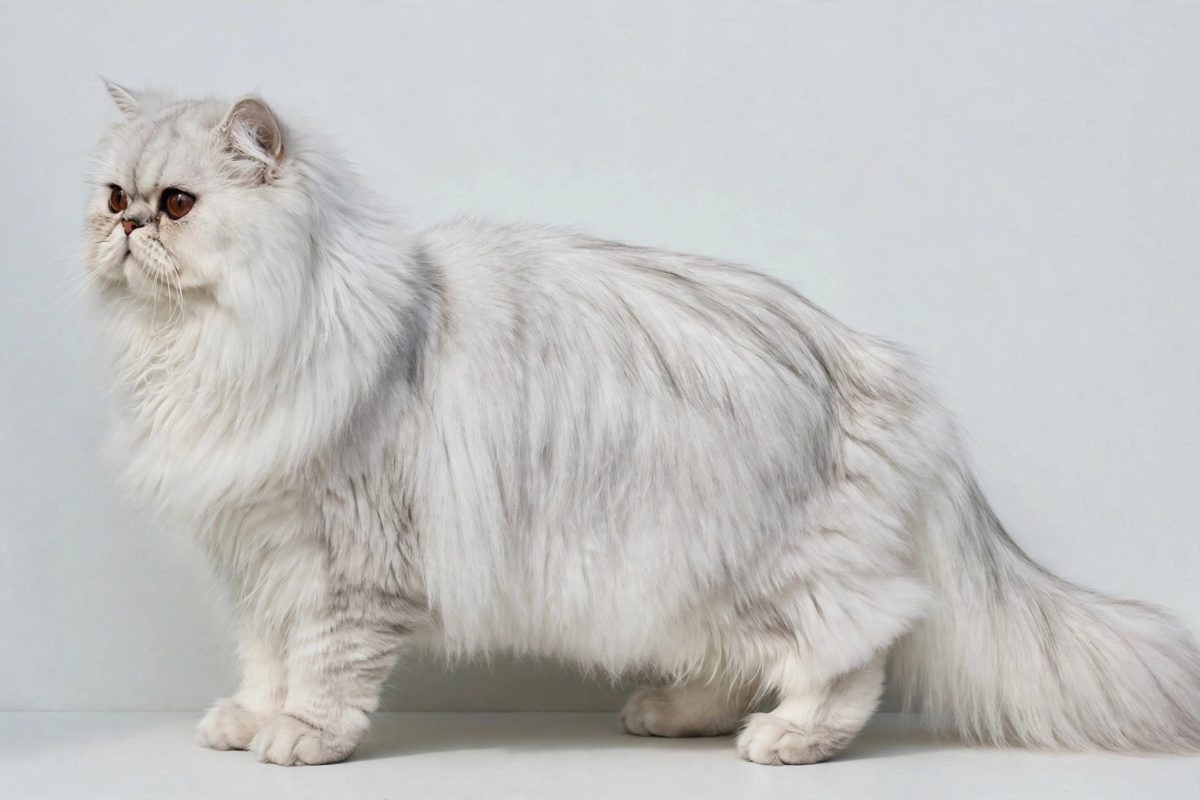
What is a normal weight for a cat?
There is no single normal number, because cats come in very different frames. The published averages for a healthy adult cat at an ideal weight are about 7 lb (3.2 kg) for a male and 6 lb (2.8 kg) for a female, and those are averages, not a range every cat should fit. Plenty of healthy cats weigh more: a big-framed cat can be in perfect shape at a weight that would be far too heavy for a small-framed cat. That is why vets judge the shape in front of them, the body condition, instead of trusting the scale alone, and why this calculator asks about ribs and waist as well as weight. Got a kitten rather than an adult? The Kitten Weight Calculator checks a kitten's weight against the expected range for its age in weeks.
Cat weight chart: all 9 body condition scores
Work down the chart by feel and by eye. The last column compares each score with ideal weight, based on published veterinary guidance on % overweight per score; scores under 5 carry no percentage, because an underweight cat needs a vet check rather than a target.
| Score | Label | What you see and feel | Compared with ideal weight |
|---|---|---|---|
| 1 | Underweight | Ribs, spine and hip bones stick out with no fat over them. The waist pinches in sharply and the belly tucks up hard. | Below ideal |
| 2 | Underweight | Ribs and spine are easy to see on a short coat. No fat pads, a strong waist, and a tucked-up belly. | Below ideal |
| 3 | Underweight | Ribs are easy to feel and may show slightly. A clear waist, a tucked belly, and almost no fat pad. | Below ideal |
| 4 | Lean | Ribs are easy to feel under a very light fat cover. A clear waist, a slight belly tuck, and only a tiny fat pad. | Ideal range |
| 5 | Ideal | Ribs are felt under a light fat cover. A waist shows behind the ribs, and the belly carries a small fat pad with a gentle tuck. | Ideal |
| 6 | Overweight | Ribs are felt under a thicker fat cover. The waist is hard to see, the belly tuck has gone, and the fat pad is growing. | About 10% over |
| 7 | Overweight | Ribs are hard to feel through a clear layer of fat. The waist barely shows, the belly may look a little round, and the fat pad is easy to feel. | About 20% over |
| 8 | Obese | Ribs cannot be felt under the fat cover. No waist from above or the side. A round belly with a clear fat pad, and fat over the lower back. | About 30% over |
| 9 | Obese | Ribs are buried under heavy fat, with fat over the back, face and legs too. The belly hangs and sticks out, with no waist at all. | About 40% over or more |
One wrinkle worth knowing: a score of 6 may be acceptable in some older cats, whose shape changes with age. If your older cat scores 6 and your vet is not concerned, there may be nothing to fix.
How do you check your cat's body condition at home?
Three checks, in this order, take under a minute. First, feel the ribs: run both hands flat along your cat's sides. On a cat at a healthy weight the ribs are easy to feel under a light cover of fat; if you have to press to find them, there is too much fat over them, and if they stick out sharply, there is too little. Second, look from above: a cat in good shape shows a waist narrowing behind the ribs; a straight or bulging outline means extra weight. Third, look from the side: the belly of a healthy cat tucks upward toward the back legs, while an overweight belly hangs level or rounds downward. Weigh your cat on the same scale every few months as well (in a carrier on a bathroom scale, minus the carrier, works) so you catch a drift early, whichever direction it goes.
Is my cat overweight or obese?
The words have set meanings. A cat is overweight at 10–20% above their ideal weight, which matches scores 6 and 7, and obese at more than 20% above ideal, scores 8 and 9. In practice you rarely need the percentage first: score the body condition, and the label follows. What matters next is the response. An overweight cat usually needs nothing more dramatic than measured portions and time, and the Cat Weight Loss Calculator builds that gentle plan. An obese cat should see a vet first, because at that level the target weight and the pace both need a professional eye, and a cat must never be put on a crash diet.
How does the cat weight calculator work?
You supply two things: the scale weight, and the body condition score that matches what your hands and eyes find. For scores above ideal, the calculator turns the score into an estimated ideal weight using the published percentages: each score above 5 stands for roughly 10% more weight than ideal, so the estimate divides the current weight by 1.1 for a score of 6, by 1.2 for 7, by 1.3 for 8, and by at least 1.4 for 9. These estimates are based on published veterinary guidance on % overweight per score. For scores of 4 or below there is deliberately no estimate: a lean cat may need nothing at all, and an underweight cat needs a vet, not a number.
Worked example
A cat weighs 12 lb and matches score 7: the ribs are hard to feel through fat, and the waist barely shows. Score 7 means about 20% over ideal weight, so the estimate is 12 ÷ 1.2 = about 10 lb. That 10 lb becomes the target: the Cat Weight Loss Calculator turns it into daily calories and a safe timeline of roughly half a percent to one percent of body weight per week.
Where these numbers come from: see our Sources page.
When should you see a vet about your cat's weight?
See a vet when the weight changes without a reason you can point to: a cat gaining steadily on the same food, or losing weight with no diet change at all. Book promptly if an older cat is losing weight, if your cat scores 1–3 or 8–9 above, or if a weight change arrives with other signs such as drinking much more than usual, low energy, or a dull coat. And one rule outranks every plan on this site: a cat who stops eating needs a vet quickly, especially an overweight cat, because not eating is itself dangerous for cats. A scale and a score tell you where your cat stands; only a vet can tell you why.
Cat weight questions
How much should my cat weigh?
It depends on your cat's frame, not on one fixed number. The published averages for a healthy adult cat at an ideal weight are about 7 lb for a male and 6 lb for a female, but plenty of healthy cats weigh more than that because they are built bigger. The better test is body condition: ribs easy to feel under a light fat cover, a waist you can see from above, and a belly that tucks up slightly from the side. The calculator above scores exactly that.
What is the average weight of a cat?
The average mature weight of a healthy domestic cat is about 3.2 kg (7 lb) for males and 2.8 kg (6 lb) for females. Those are averages of an ideal weight, not a range every cat should fit: a big-framed cat can be healthy at a weight that would be too heavy for a small-framed cat. That is why vets judge a cat by body condition score rather than by the scale alone.
Is my cat obese?
A cat counts as obese at a body condition score of 8 or 9 out of 9, which means more than 20% above their ideal weight. The signs are practical: you cannot feel the ribs under the fat even when you press, there is no waist from above or from the side, and the belly hangs round with a clear fat pad. If that sounds like your cat, the next step is a vet visit to agree a target weight, then a slow plan, never a crash diet.
What does a body condition score mean?
It is the scale vets use to judge a cat's shape instead of trusting the scale weight. Scores run from 1 (very thin) to 9 (very heavy), and 5 is ideal. The score is based on what you can feel and see: the fat cover over the ribs, the waist from above, and the belly from the side. Each score above 5 stands for roughly 10% more weight than ideal, so a score of 7 means about 20% over.
Do big breeds like Maine Coons weigh more?
Yes. A veterinary breed profile gives Maine Coon males at up to 20 lb, about 8 lb more than females, and the breed doesn't reach full maturity until about 4 years old. A weight that would be far too much for a typical cat can be normal for a Maine Coon. That is exactly why the body condition score, which judges the individual cat's shape, is a fairer test than any breed or average number.
Why is my cat losing weight?
This page cannot diagnose that, and unexplained weight loss in a cat always deserves a vet visit. Book one promptly if the weight is dropping without a diet change, especially in an older cat, and sooner still if your cat is also eating less, drinking more, or seems low on energy. Weight loss is a sign with many possible causes, and only an examination can sort out which one applies to your cat.
Next calculators you might need
Cat Weight Loss Calculator
A slower, safer plan for cats at 0.5–1% per week, and why faster is dangerous.
Live nowCat Food Calculator
Daily portions for cats, wet, dry or mixed.
Live nowCat Age Calculator
Your cat's age in human years, with the full chart.
Live nowOver ideal? Build the gentle plan with the Cat Weight Loss Calculator. See the Health & Safety hub for the full list.