
Dog Weight Loss Calculator
A weight-loss ration calculated at your dog's target weight, with a safe weekly loss rate and a realistic timeline.
Quick answer: Feed resting energy at the target weight — 70 × (target kg)0.75 × 1.0 — and expect to lose 1–2% of body weight per week. A 60 lb dog heading for 50 lb eats about 725 kcal a day and should arrive in roughly 9–18 weeks.
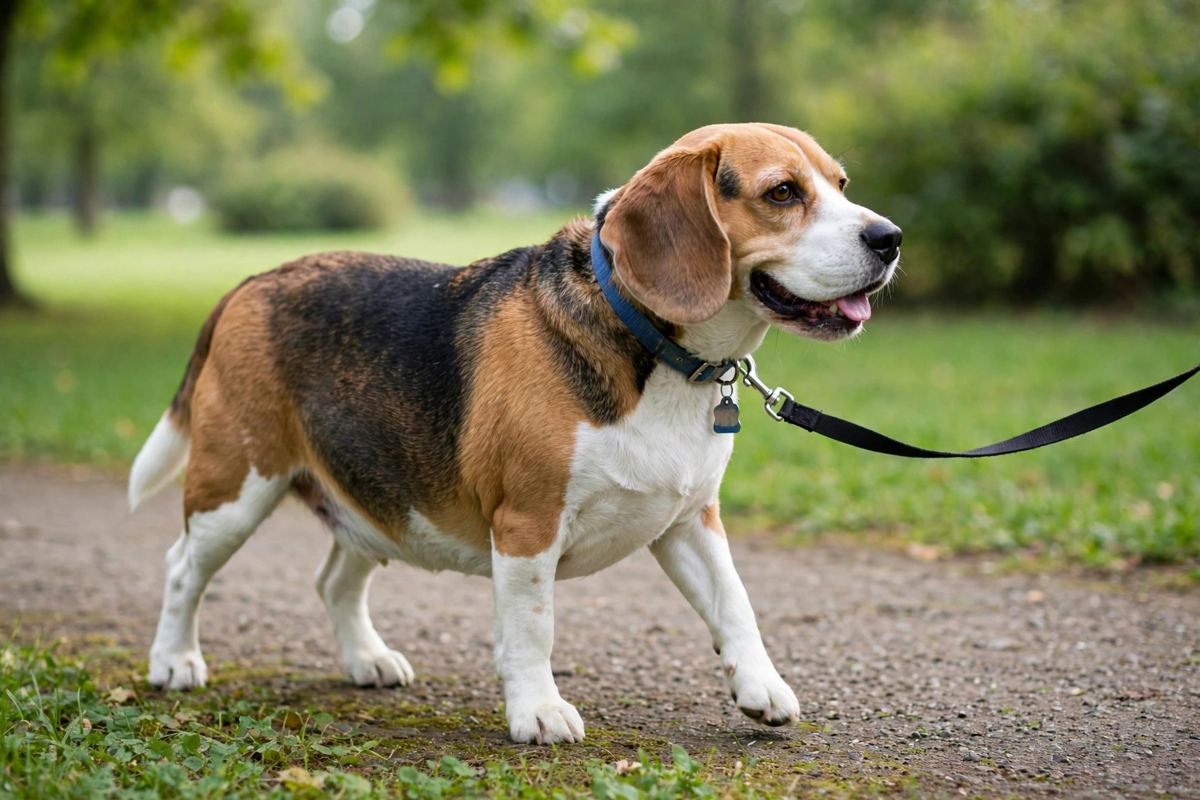
Why does a dog's extra weight matter?
Extra weight is a genuine health problem, and it is the most common nutritional problem vets see in pet dogs: overweight dogs face higher rates of joint disease, diabetes and breathing problems, and studies of lifespan consistently find lean dogs living longer, healthier lives. The encouraging part is how mechanical the fix is. Dogs do not need willpower. They need the humans in the house feeding one measured number, every day, with treats counted inside it. Do that at the safe rate and the scale moves with almost no drama. This plan gives you the number; the weigh-in every two weeks tells you whether it is the right number for your individual dog.
How much weight should a dog lose per week?
A dog should lose 1–2% of body weight per week. The table below translates that rule into pounds per week. If your dog is losing much faster than the right-hand column, the plan is too tight; much slower for a month, and it needs a small trim.
| Dog's weight now | Loss per week at 1% | Loss per week at 2% |
|---|---|---|
| 20 lb | 0.2 lb | 0.4 lb |
| 40 lb | 0.4 lb | 0.8 lb |
| 60 lb | 0.6 lb | 1.2 lb |
| 80 lb | 0.8 lb | 1.6 lb |
| 100 lb | 1.0 lb | 2.0 lb |
How does the dog weight loss calculator work?
Two decisions make this plan different from "just feed less." First, calories are calculated at the target weight, not today's: fat needs almost no calories to maintain, so feeding a cut from the current ration preserves most of the problem. Second, the timeline comes from the percentage rate, not a deadline. At 1–2% of body weight per week the loss compounds gently, so the calculator works your weeks out from the ratio between current and target weight. As your dog nears the target, the same daily ration turns into their maintenance amount almost automatically.
Worked example
A dog weighs 60 lb today, with a target of 50 lb (22.7 kg). Resting energy at target = 70 × 22.70.75 ≈ 727 kcal, so the plan feeds about 725 kcal a day — noticeably less than the roughly 1,300 kcal that maintains a neutered 60 lb dog. At a safe 1–2% of body weight per week (0.6–1.2 lb at the start), the 10 lb journey takes about 9 to 18 weeks. On a food labeled 380 kcal per cup, the ration is about 1.9 cups a day, split across two meals, treats included in the total.
Where these numbers come from: see our Sources page.
Does a dog need a vet check before a weight-loss plan?
Book one short visit before the first reduced meal. The vet confirms the target weight (owners routinely guess too high or too low), checks body condition, and rules out medical drivers of weight gain (an underactive thyroid is the classic one) that no diet can fix. Then weigh in every two weeks, free at most clinics, and adjust the ration by about 10% up or down if the loss is running well outside the 1–2% band. The plan is a starting point with a feedback loop, so expect to fine-tune it as you go.
How do you keep a dog's weight-loss plan on track?
Weigh the food on a kitchen scale for the first week, because scoops lie by more than most people believe. Keep treats inside about 10% of the plan's calories and subtract them from meals. Feed separately from other pets, clear the children's snack-fallout zone after meals, and expect the begging campaign to peak in week two and fade when it stops paying. Exercise helps fitness and mood, but the ration does the losing: weight comes off in the bowl. Walks are for your dog's head and joints.
Dog weight loss questions
Does my dog need to lose weight?
If you have to press firmly to feel the ribs and the waist has disappeared, almost certainly yes. Score your dog first with our Dog Ideal Weight Calculator: at a body condition score of 6 or more out of 9, a dog is carrying extra weight — and the plan on this page is built for exactly that.
How fast should a dog lose weight?
About 1–2% of body weight per week. For a 60 lb dog that is roughly 0.6 to 1.2 lb a week: steady, visible progress without hunger-driven misery or muscle loss. Faster is not better: crash diets risk nutrient deficiencies and a dog who raids bins and counter-surfs out of genuine hunger. If your dog is losing much faster than 2% a week on the plan, feed slightly more and tell your vet at the next weigh-in.
How many calories should a dog eat to lose weight?
The standard veterinary method feeds resting energy at the target weight: daily calories = 70 × (target weight in kg)^0.75 × 1.0. A dog heading for 50 lb therefore eats about 725 kcal a day, regardless of what they weigh today. It feels counterintuitive, but feeding calculated from the current, heavier weight simply maintains most of the excess. The target-weight method is what actually moves the scale.
Why is the plan worked out at the target weight, not the current weight?
Because fat tissue needs very few calories to maintain itself. Feeding a percentage cut from today's maintenance amount keeps most of the surplus in place and stalls the plan a few pounds in. Feeding the resting needs of the dog you are aiming for builds the endpoint into the plan from day one. As your dog approaches target weight, the same ration smoothly becomes their maintenance amount.
How long will my dog's weight loss take?
Divide the journey by the safe rate. At 1–2% of body weight per week, a dog losing 10 lb from 60 lb needs roughly 9 to 18 weeks — the calculator shows your dog's own range. Larger losses take proportionally longer, and that is fine: plans measured in months are the ones that stay off, because the feeding habits that finish the plan are the habits that maintain the result.
What if my dog is not losing weight on the plan?
First, audit the inputs properly for a week: weigh the food instead of scooping, count every treat and chew, and check whether anyone else in the house is feeding extras. If the scale still has not moved after 3 to 4 weeks, reduce the ration by about 10%. If that fails too, go back to the vet. Low thyroid function and other medical causes are uncommon but real, and no calculator can rule them out.
Next calculators you might need
Pet Calorie Calculator
Daily calories (RER × life-stage factor) for dogs and cats.
Live nowDog Food Calculator
How many cups a day, from your dog's weight and your food's calories per cup.
Live nowDog Life Expectancy Calculator
Typical lifespan ranges by breed and size, from published life-table studies.
Live nowCat Weight Loss Calculator
A slower, safer plan for cats at 0.5–1% per week, and why faster is dangerous.
Live nowCat Weight Calculator
Is your cat a healthy weight? Score their body shape on the vets' 1–9 scale.
Live nowFor the maintenance side of the picture, the Pet Calorie Calculator shows what your dog needs at a steady weight. More health tools are on the way: see the Health & Safety hub.