
Dog Ate Grapes or Raisins
Grapes, raisins and currants can cause sudden kidney failure in dogs. There is no way to tell in advance which dog will be affected, and no amount is known to be safe — so if your dog has eaten any of them, treat it as an emergency and make the call now, even if he seems completely fine.
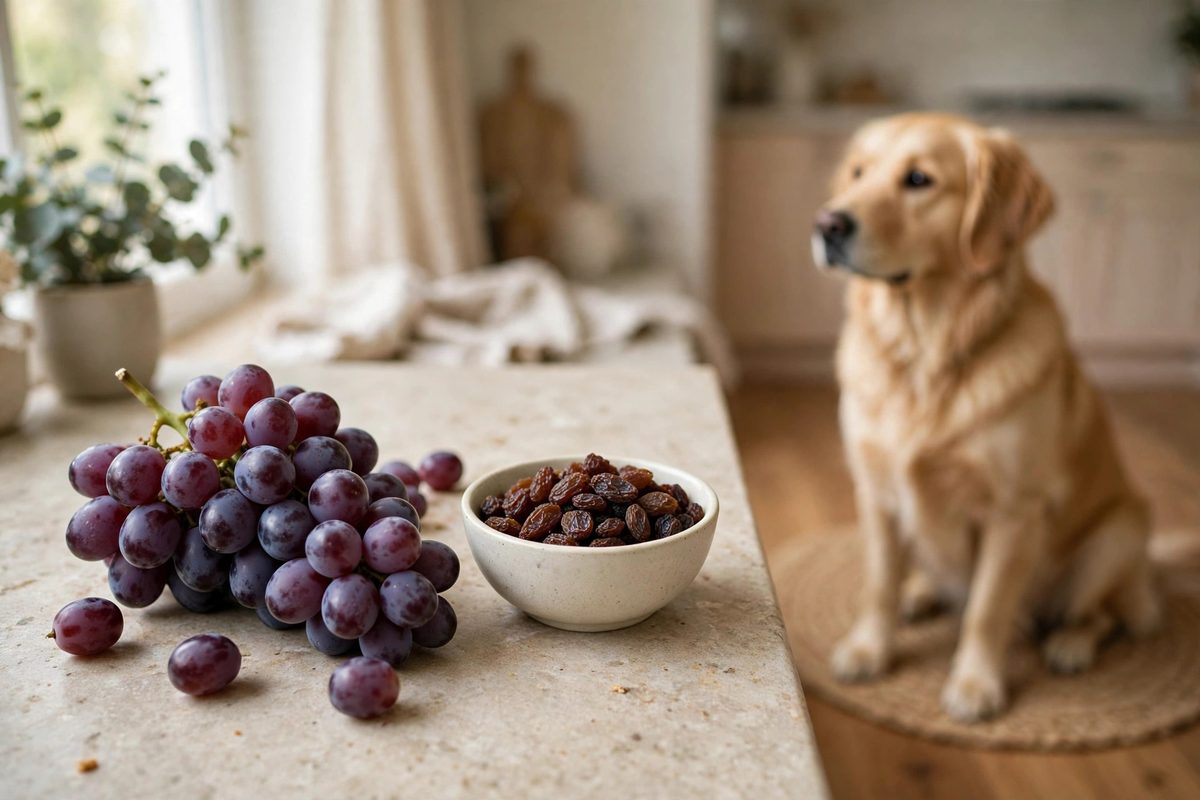
Why grapes and raisins are dangerous for dogs
The poison is in the fruit itself. Grapes, raisins and Zante currants (the small dried grapes sold as currants) carry high levels of tartaric acid. Most animals clear this acid from the body without any trouble, but dogs handle it poorly: instead of being excreted, it builds up inside the cells of the kidneys. That build-up damages the kidney tissue, and in some dogs the kidneys stop working altogether — they can no longer filter waste from the blood or produce urine.
Two things make this poison especially hard to judge at home. First, the amount of tartaric acid varies from fruit to fruit, so the same handful can leave one dog unharmed and put another into kidney failure. Second, there is no test that shows in advance which dog will react. That is why vets treat every grape, raisin or currant a dog eats as an emergency whatever the amount, and why this page will never print an amount as safe.
It is also worth knowing what this poisoning is not. It is not an allergy, and it does not depend on the dog being small, old or unwell — healthy adult dogs of every size have been affected. Nor does a dog build up protection by eating grapes before without problems: a dog who has eaten grapes in the past and seemed fine has simply been lucky with fruit that carried less of the acid.
Which foods count as grapes?
It is not just the fruit bowl. Raisins and currants hide in fruit cake, mince pies, Christmas pudding, hot cross buns, raisin bread, trail mix, granola and cereal, and grapes themselves turn up in fruit salads and lunchboxes left within reach. Tamarinds carry the same acid and the same warning. If the food contained any of these and your dog ate it, the call is the same.
Signs to watch for, and when they appear
The first signs are stomach signs, and they usually arrive within 6 to 12 hours of eating: vomiting or diarrhoea are the most common. As things progress, a dog may go off his food, seem unusually tired, have a sore belly, drink much more than usual, become dehydrated, or shiver and tremble. The danger at the end of the timeline is kidney failure, which develops within 24 to 72 hours of eating — the kidneys make less and less urine, then none at all.
| When | What you may see |
|---|---|
| Within 6–12 hours | Vomiting or diarrhoea — usually the first signs |
| After that | Not eating, tiredness, belly pain, weakness, drinking much more than usual, dehydration, trembling |
| Within 24–72 hours | Kidney failure: passing very little urine, then none at all |
Once a dog’s kidneys have stopped producing urine, the outlook is grave. That is the whole reason the call belongs in the first hour, not when the later signs show up: treatment has far more to work with while the kidneys are still functioning. A dog who looks well this afternoon has not been given the all-clear — the serious stage of this poisoning is still ahead of him at that point.
What to tell the vet when you call
Say what was eaten — grapes, raisins, currants, or a food containing them — roughly how much is missing, and when it happened. Give your dog’s weight and describe any signs you have already seen, even mild ones. Keep the packaging if there is any and take it with you. Then follow the vet’s instructions exactly: only a vet who knows the case can direct treatment, and with this poison, earlier is worth a great deal.
Where these figures come from: see our Sources page.
Poison helpline numbers are listed on our Disclaimer page.
Other foods that are an emergency for dogs
Dog Ate Xylitol
Xylitol (birch sugar) in gum and peanut butter can crash a dog’s blood sugar within 30 minutes.
Read the guideDog Ate Onion or Garlic
Onion and garlic break down a dog’s red blood cells — and the signs often take days to appear.
Read the guideDog Chocolate Toxicity Calculator
Dog ate chocolate? Work out the dose and danger level — and call your vet.
Live nowDog Ate Ibuprofen
Ibuprofen is a painkiller for people, not dogs — it can ulcerate the stomach and damage the kidneys.
Read the guideMore everyday foods that can poison a dog are listed in What Can Dogs Not Eat?