
Dog Ate Onion or Garlic
Onion and garlic — raw, cooked, dried or powdered — damage a dog’s red blood cells. The damage is slow and hidden: a dog can look perfectly well for days while his blood is quietly breaking down. If your dog has eaten onion or garlic in any form, make the call now rather than waiting for him to look ill.
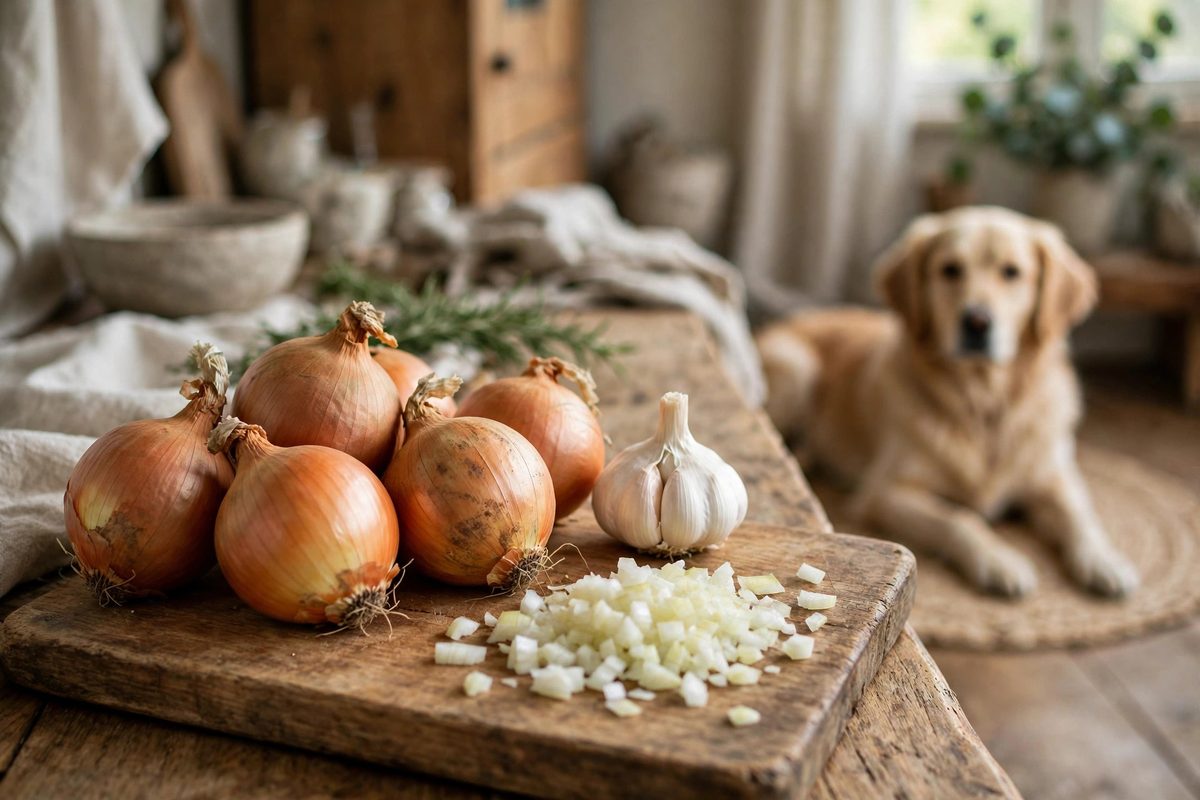
Why onion and garlic are dangerous for dogs
Onions, garlic and their relatives — chives and leeks belong to the same family — contain sulfur compounds that attack red blood cells. The compounds oxidise the cells from inside, damaging them until they break apart. That breaking-down is called hemolysis, and its result is anemia: with fewer working red blood cells, less oxygen reaches the body, and the dog weakens. The pigment from the destroyed cells can turn the urine dark and put strain on the kidneys as the body clears it.
Garlic is the stronger of the two — roughly three to five times as toxic as onion, weight for weight. And cooking does not rescue either of them: dogs have been affected by raw, cooked, dehydrated and granulated onion and garlic alike. The concentrated forms deserve the most care. Onion and garlic powders, dried flakes and dry soup mixes pack a large amount into a small spoonful, and they hide in foods nobody thinks of as onion dishes — gravy, stock, baby food and leftovers among them.
Portion size misleads here, too. A spoonful of onion powder stirred through a family meal can carry more of the poison than a slice of raw onion, and a small dog needs far less of either to be in trouble. If you are weighing up whether the amount was “enough to matter”, that judgement belongs to the vet, not the kitchen scales.
Signs to watch for, and when they appear
This is the deceptive one. The changes in the blood begin within about a day of eating, but the signs usually do not: they generally appear only once a substantial amount of blood has broken down, and the breakdown typically happens 3 to 5 days after the meal. A dog can eat onion on Monday, seem himself all week, and be seriously anemic by Friday.
| When | What you may see |
|---|---|
| The first day or two | Usually nothing to see — the damage has started, but the signs have not |
| Typically 3–5 days after eating | Tiredness, going off food, breathing faster than usual, a racing heart, weakness, no energy for exercise |
| As the anemia deepens | Pale gums, yellowing of the gums and eyes, dark or reddish urine, collapse |
Because the early days are silent, “he seems fine” is not evidence with this poison — it is the expected pattern, for dogs who recover and dogs who don’t alike. What the vet can do in those quiet days is check the blood, where the damage shows up long before the dog does. That early window, while the dog still looks well, is exactly when help is worth most.
One sign is easy to miss and worth looking for: check the colour of his urine and his gums each day for the rest of the week. Dark, tea-coloured or reddish urine, or gums that look paler or more yellow than usual, are the visible end of the hidden process — and either one means the vet needs to hear from you again the same day.
What to tell the vet when you call
Say what form it was — raw, cooked, dried flakes or powder — roughly how much, and when he ate it. Give your dog’s weight and mention anything you have noticed, even if it seems unrelated: tiredness or off-colour urine days later is part of this picture. Keep any packaging (a soup mix or stock pot label helps) and follow the vet’s instructions exactly.
Where these figures come from: see our Sources page.
Poison helpline numbers are listed on our Disclaimer page.
Other foods that are an emergency for dogs
Dog Ate Grapes or Raisins
Grapes, raisins and currants can shut down a dog’s kidneys. The signs, and when they appear.
Read the guideDog Ate Xylitol
Xylitol (birch sugar) in gum and peanut butter can crash a dog’s blood sugar within 30 minutes.
Read the guideDog Chocolate Toxicity Calculator
Dog ate chocolate? Work out the dose and danger level — and call your vet.
Live nowDog Ate Ibuprofen
Ibuprofen is a painkiller for people, not dogs — it can ulcerate the stomach and damage the kidneys.
Read the guideMore everyday foods that can poison a dog are listed in What Can Dogs Not Eat?