
Dog Ate Ibuprofen
Ibuprofen is a painkiller made for people. It sits in bathroom cabinets, handbags and bedside drawers in most homes. Dogs are not small people where this drug is concerned: in a dog, ibuprofen turns against the stomach and the kidneys, and it is no longer recommended for use in dogs at all. If your dog has eaten ibuprofen, any amount, of any product, make the call now.
Why ibuprofen is dangerous for dogs
Ibuprofen belongs to a family of drugs called NSAIDs, anti-inflammatory painkillers. It works by blocking substances called prostaglandins. In people, blocking them is largely the point of the drug. In dogs, the same prostaglandins also do quiet protective work: they help maintain the stomach’s protective lining and keep blood flowing properly through the kidneys. Block them, and both defences weaken at once.
That is why the gut and the kidneys are the organs most often harmed. The stomach lining, stripped of its protection, becomes irritated and can ulcerate; ulcers can bleed into the gut, and in the worst cases break through the stomach wall. The kidneys, short of the blood flow they depend on, can be damaged. The margin of safety is narrow in dogs, which is why ibuprofen is no longer recommended for dogs at all, even though it is sold everywhere for people.
Where ibuprofen hides
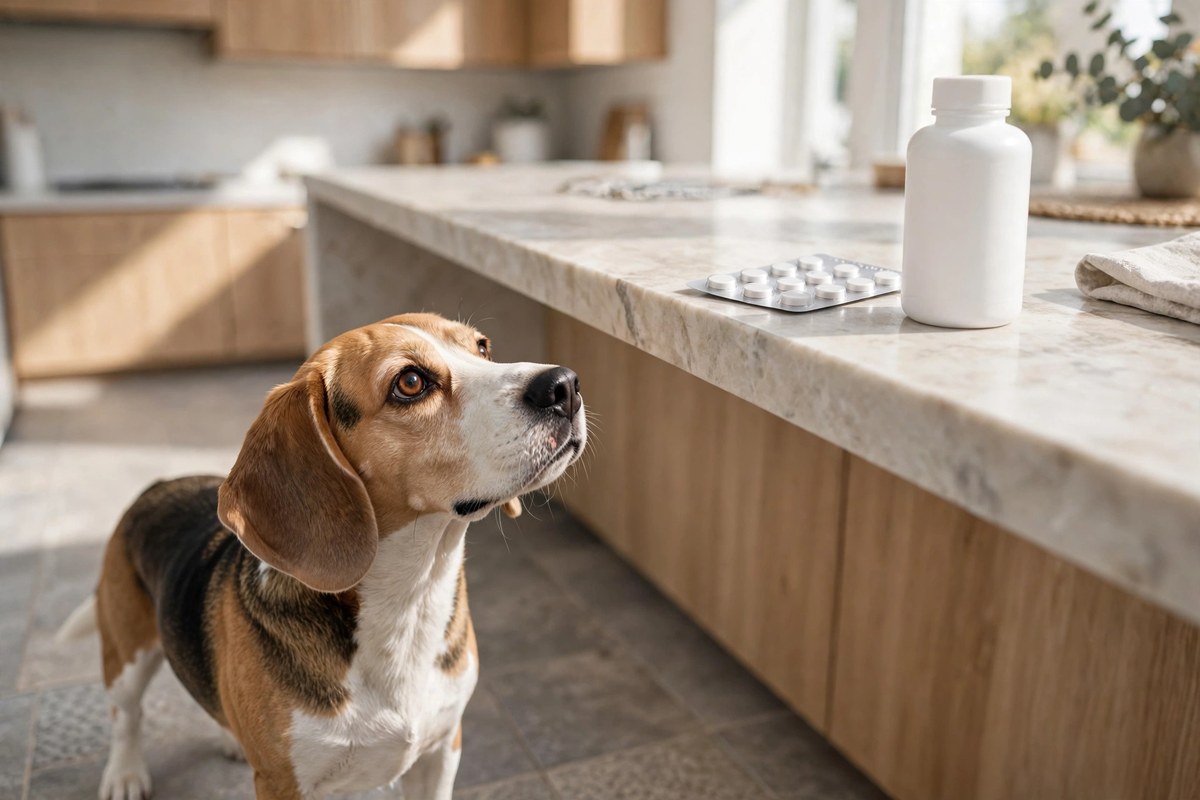
Ibuprofen is sold everywhere, under brand names and as plain own-brand tablets, for headaches, period pain, back pain and fevers. In most homes it lives in bathroom cabinets, handbags, coat pockets, gym bags and bedside drawers, exactly the places a curious dog investigates. The tablets are small, smooth and easy to swallow, and a dog who chews through a bottle or a blister pack can take in many at once before anyone notices. Treat it the way you would treat any poison in the house: closed bottle, high shelf, shut door.
Signs to watch for, and when they appear
The stomach signs come first, and they can be seen within 24 hours of the tablets being swallowed: vomiting, sometimes with blood in it, tummy pain, diarrhea and a dog who goes off his food. Even a single ingestion can bring these signs on suddenly and severely; this is not a poison that needs days of dosing to build up. Kidney damage may not show in signs you can see at home: a dog can look merely a little unwell while the kidneys are already under strain, which is why the vet’s tests matter more than how the dog seems at home.
| When | What you may see |
|---|---|
| Within 24 hours | Vomiting (possibly with blood in it), tummy pain, diarrhea, loss of appetite, the stomach signs |
| May not show at home | Kidney damage can be under way with nothing clear to see at home, which is why the vet’s tests matter |
| In worse cases | Wobbliness, drowsiness, low blood pressure, fits (seizures) |
Do not let a quiet dog reassure you. A stomach ulcer can bleed without much to see from outside, and kidney injury does not announce itself the way a limp does. A dog who has eaten ibuprofen and seems fine at bedtime still needs the vet’s assessment: given the product, the number of tablets and your dog’s weight, the vet can judge where he stands. Your reading of his mood cannot.
What to tell the vet when you call
Name the product if you can, and say roughly how many tablets are missing and when they were eaten. Give your dog’s weight and describe any signs so far. If you have the packaging, keep it in front of you. The vet will ask what the tablets were. Then follow the vet’s instructions exactly.
Where these figures come from: see our Sources page.
Poison helpline numbers are listed on our Disclaimer page.
Other foods that are an emergency for dogs
Dog Ate Grapes or Raisins
Grapes, raisins and currants can shut down a dog’s kidneys. The signs, and when they appear.
Read the guideDog Ate Xylitol
Xylitol (birch sugar) in gum and peanut butter can crash a dog’s blood sugar within 30 minutes.
Read the guideDog Ate Onion or Garlic
Onion and garlic break down a dog’s red blood cells, and the signs often take days to appear.
Read the guideDog Chocolate Toxicity Calculator
Dog ate chocolate? Work out the dose and danger level — and call your vet.
Live nowMore everyday foods that can poison a dog are listed in What Can Dogs Not Eat?